HANtv Episode CHAPTER INDEX:
=====================
00:00 – What makes Pinot Noir so revered?
00:24 – the gaping problem with Grand Cru Pinot Noir
01:20 – the world’s most expensive wines are irrelevant
01:59 – the source of Pinot Noir’s mystique
04:04 – an intro to the wine of the day
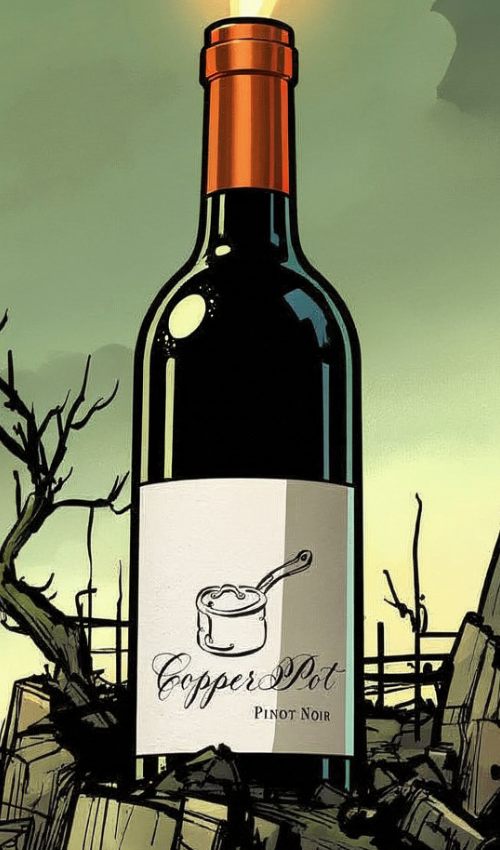
05:08 – the Copper Pot Pinot Noir origin story
06:39 – interview with winemaker John Seccombe
09:20 – tasting notes for the Copper Pot Pinot Noir 2024
12:41 – a list of South African Pinot Noirs to track down
13:59 – more videos on South African Pinot Noir
=====================
Pinot Noir gets treated with a reverence no other grape enjoys, and wine lovers will argue forever about whether it’s earned. But almost nobody asks where the reverence came from. Here’s one theory: sketch out the family tree of European wine and Pinot’s fingerprints are everywhere. Chardonnay, Gamay, Aligoté — all Pinot’s children. Riesling? A half-sibling of Chardonnay, thanks to Pinot’s promiscuous medieval dance partner, Gouais Blanc. When you drink Pinot Noir, you are quite literally drinking the patriarch of European wine. Which brings us to the Copper Pot Pinot Noir by John Seccombe of Thorne & Daughters fame — a wine that was never meant to be taken seriously. It was made as a humble house red for his in-laws’ Drakensberg hotel and named after the dented copper pots in their kitchen. Then Wine Spectator put the 2021 on its Top 100 list — the only South African Pinot Noir that year. In this video I find out whether the 2024 lives up to the accident of its own success.
But of course, if you have yet to sign up for your Monthly HanDrinksSolo Wine Subscription then you’ll have to hunt this wine down in your own time. But until then, here are my tasting notes and some technical specs:
—
TASTING NOTES
Aromas: The nose arrives in roughly the opposite order to the palate. First sniff: cedar wood — toasted French oak signing the bottle; old Burgundian barrels, blonde-toasted, no vanilla, just a savoury lift. Then mushroom, the classic Pinot tell — those thin skins produce an earthy, forest-floor note you don’t get in thicker-skinned reds. Give it a swirl and the fruit steps forward: vivid primary cherry, a flicker of cranberry, a touch of red liquorice, and at the edge, strawberries and cream — the signature of the roughly 50% whole-bunch fermentation.
—
Palate: The palate runs forward. Up front: soft strawberry taffy — whole-bunch again. Mid-palate: juicy red cherry. Then it tightens: bright raspberry from Pinot’s natural acidity, a spicy cedar kick, and a fine red cherry-skin tannin sitting on the gums — that’s 30 days on skins framing the fruit rather than ambushing it. Extraordinarily young. Gloriously friendly. Layered.
—
TECHNICAL SPECS
Wine of Origin Western Cape. The fruit comes from a handful of Overberg vineyards on clay/shale and quartz/sandstone soils, plus a small parcel of organically farmed Pinot Noir in the Bottelary Hills on decomposed granite. Winemaking is as minimal as it gets: wild yeast ferments, no additives beyond a little sulfur at crush and during maturation, 40–60% whole clusters for structure and savouriness, gentle extraction, and around 30 days on skins. The wine then spends 9 months in older small French oak barrels — there to round out structure, not to flavour the wine.
Alc. 13.96% | Sugar 2.1 g/L | Acid 5.5 g/L | pH 3.52


Recent Comments