HANtv Episode CHAPTER INDEX:
=====================
00:00 – The ZAR3.00 Bottle That Launched SA Cap Classique (Simonsig Kaapse Vonkel, 1971)
03:01 – Who Is Simonsig? Frans Malan & Estate-Bottled Wine
03:56 – Simonsig Built the New World’s First Wine Route (1971)
05:30 – Cool-Ferment Cellars: Simonsig’s Quiet Revolution
06:10 – One of SA’s First Serious Rhine Rieslings
07:14 – What Is the Simonsig GrapeSmith Range?
08:15 – SA’s First Solo Roussanne at the Cape Winemakers Guild
11:04 – Mediterraneo 2021 Tasting — The Nose (Marsanne, Roussanne, Grenache Blanc, Verdelho)
13:13 – Mediterraneo 2021 — The Palate & Why It’s So Zippy
14:49 – Maritimo 2021 — Maiden-Vintage Rhône Red (Mourvèdre, Grenache, Syrah, Marselan)
17:43 – Maritimo 2021 — The Palate: Light, Fresh, Structured
19:54 – Where to Taste More Stellenbosch Pioneers Next
=====================
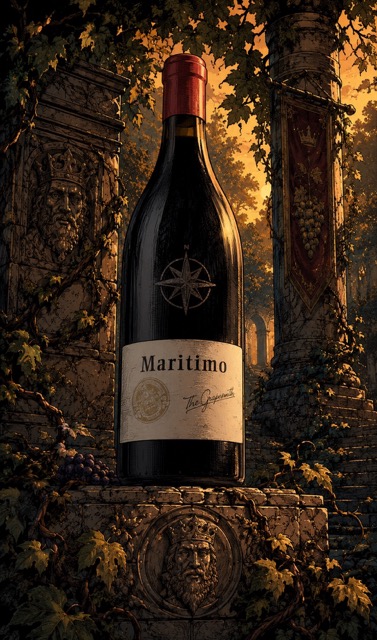
Bartolomeu Dias rounded the Cape in 1488 and opened the sea road east; the vines followed by ship two centuries later. The Malans named this wine for those sailors, and the name earns itself, because Maritimo is a wine about arriving somewhere new. This is its maiden vintage — Mourvèdre, Grenache Noir, Marselan and Syrah, four grapes chosen not for nostalgia but for heat. Marselan in particular is a French crossing from 1961, Cabernet Sauvignon by Grenache, bred tough for a warming world. Simonsig planted that thinking decades before the rest of the Cape started worrying about the weather. What lands in the glass is the opposite of the muscular Stellenbosch red you’re bracing for: light on its feet, carbonic-lifted, only seven barrels of it, and carrying fifteen months of oak you’d genuinely never find. Everyone files Simonsig under supermarket furniture. Here’s the estate’s answer.
But of course, if you have yet to sign up for your Monthly HanDrinksSolo Wine Subscription then you’ll have to hunt this wine down in your own time. But until then, here are my tasting notes and some technical specs:
—
TASTING NOTES
Aromas: What a crazy, pretty nose. Pristine, pure raspberry candy — full fairground raspberry sherbet, with the gleam of toffee-apple coating catching the sun. But it doesn’t strand you in fairyland for long. Underneath comes something far more elegant: purple flowers, violet maybe, a smudge of red rose, a sweet herbal lift like lavender leaf. Then an earthier puff — terracotta, potting soil — grounding the whole thing. That candied lift is the carbonic-maceration Mourvèdre talking. This wine sees fifteen months of oak and you’d never know; the primary fruit is completely untouched, which is remarkable for a wine roughly five years from harvest with no great wall of tannin doing the preserving.
—
Palate: Johan Malan was chasing a lighter-framed, lower-alcohol red, and that phrase usually makes me flinch — South Africa has a long, sad history of selling thin, hollow wines as “light”. This is not that. This is light on its feet like a cat burglar. Underneath there’s pure sour red cherry folding into the sweeter candy, with a lovely bittersweet, chewy texture — cherry skin, citrus pith. The tannins are gloriously fine and evenly applied, like a thin patina laid right across the back of the palate, letting nothing slip past too juicy or too easy. Just enough structure to lift the finish, which is frankly the only thing standing between you and finishing the bottle in one unsupervised sitting. That textured little pause makes you stop and reconsider — and the finish lingers, vivid and bright, all clean red cherry and raspberry.
—
TECHNICAL SPECS
Wine of Origin Stellenbosch. Mourvèdre 39% | Grenache Noir 26% | Marselan 19% | Syrah 16%. The Mourvèdre came in on 1 April at 21°B, destemmed and fermented fifteen days on gentle punch-downs, with a portion carried through two weeks of carbonic maceration. Grenache Noir was picked on 26 March with 26% whole bunches and daily pump-overs; a small batch was co-fermented with Syrah and hand punched three to four times a day. The Marselan fermented spontaneously over thirteen days. The Syrah, off the Mr Borio vineyard, went in under a submerged cap with 26% whole bunches and a single delestage. Every batch aged separately for fifteen months in 225-litre French oak — mostly older barrels, bar a 20% new-oak portion on the Grenache — then three months in concrete egg before bottling. Seven barrels made.
Alc. 12.5% | Sugar 2.2 g/L | Acid 6 g/L | pH 3.28 |


Recent Comments