HANtv Episode CHAPTER INDEX:
=====================
0:00 – The Filter Stack
2:07 – What “Honest Wine” Actually Means
3:20 – The Freshness Problem: France vs the Cape
5:18 – Meerlust in One Minute
6:24 – Filter One and Two: Malolactic and Oak Toast
8:47 – The Concrete Question
11:04 – The Gym: What They Did in the Vineyard
13:47 – The Block So Good They Took the Oak Away
15:09 – Tasting Notes: The Nose
17:32 – Tasting Notes: The Palate
19:40 – Two Blocks in One Glass (and a Pineapple Defence)
21:19 – The Chardonnay Dare
22:24 – Truer, Not Better
=====================
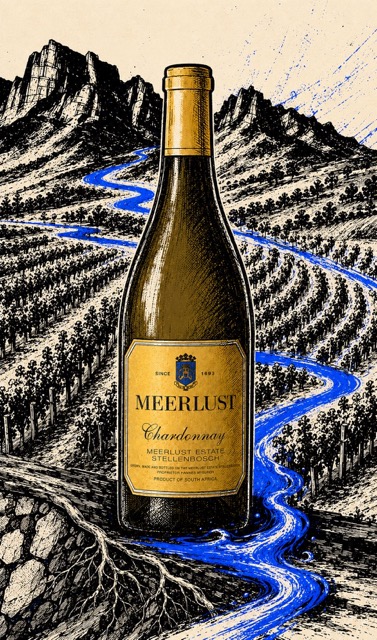
There is a word in wine that gets used constantly and explained almost never: honest. It sounds like the sort of thing people say when they would rather not say anything at all. So here is a definition you can carry around for the rest of your drinking life: an honest wine is one where you can still tell what the vineyard looked like before anyone got to it. Not a moral claim — just a question of how much has been stacked on top, and whether you can still see the face underneath. Which is exactly what winemaker Wim Truter has been doing at Meerlust. Malolactic pulled from 100% down to 10–15%. Oak toast turned down. A block so precise they took it out of barrel and put it into concrete, because the reward for being the best fruit on the farm was removal rather than more oak. Meanwhile the most famous white wine regions on earth are losing freshness to physics and cannot legally move. We are gaining it by choice. This bottle is what that choice tastes like.
But of course, if you have yet to sign up for your Monthly HanDrinksSolo Wine Subscription then you’ll have to hunt this wine down in your own time. But until then, here are my tasting notes and some technical specs:
—
TASTING NOTES
Aromas: A touch of reduction straight out the bottle — not a fault, a decision — reading as smoked walnut, with the reductive sulphur compounds and the 30% new French oak arriving at the same answer from opposite directions. Underneath that, oatmeal and something I can only describe as leesy sourdough: spent yeast cells slowly breaking down and handing the wine a bready, savoury weight it did not have on day one. Then gravel dust, which I can taste and, thanks to my own research, am now contractually unable to explain to you. Give it a few minutes and that first reductive burst blows off, and something completely different walks in — delicate lemon candy, and behind it riper soft citrus. Mandarin, or as we would say here, naartjie. That is malolactic held down to a sliver: malic acid survived, so the citrus did too.
—
Palate: First thing that lands is the concentration. This is not a thin wine, and that is vineyard work arriving in the glass rather than anything clever done in the cellar. Then nutmeg off the oak — spice rather than sweetness, which is precisely what turning the toast down is supposed to buy you — followed by lemon candy again, ripe Seville orange and the naartjie carrying through. It sits firmly in the citrus zone, and where it sits is the interesting part: not the green lime you would expect from a cold Elgin Chardonnay, and emphatically not the peaches-and-cream of Napa, but a beautifully faceted citrus in between the two. There is lime cordial in here as well, though if this is green it is a sweeter, tropical green — honestly, closer to kiwi fruit. And a gentle roasted pineapple that had me puzzled until I looked at the map: the Compagniesdrift block is weathered granite on a north-facing slope, and north-facing in this hemisphere means sun. The finish hands you a little toast and marmalade, which is citrus cooked, sweetened and with the bitterness deliberately left in — the wine giving you back its own fruit on the way out.
—
TECHNICAL SPECS
Grown on the Meerlust estate in the unofficial but very important Eersterivier ward of Stellenbosch, roughly eight kilometres from False Bay. Two blocks do most of the talking: Quarry, on greywacke with interbedded shales on a cool, windswept foot slope, and Compagniesdrift, weathered granite on a north-facing slope. Fruit sourcing was widened from granite alone to granite plus greywacke and shale, which is where Wim Truter says the citrus lift arrives from. The vineyard work has gone into bud fertility, bearer units and balance on the cordon, with Italian pruning specialists on the farm four seasons running. Malolactic fermentation is held to 10–15%, down from 100% fifteen years ago. 90% of the wine is fermented and aged in 300-litre French oak — 30% new, 33% second fill, 32% third fill — with lower toast levels and longer seasoning on the wood. 8% ferments in concrete, with a first ceramic trial this vintage, and dissolved oxygen is measured on every single transfer.
Alc. 13.33% | Sugar 3.1 g/L | Acid 6.3 g/L | pH 3.35 | Sulfur (total) not published |


Recent Comments