HANtv Episode CHAPTER INDEX:
=====================
0:00 – Cold Open — A Florist in a Car Park
0:48 – The Baby Sister of The Chocolate Block (and 23 Michelin Stars)
1:45 – Michelin Now Rates Wineries. Burgundy Is Not Amused
2:38 – The Chocolate Block: A Silly Name in the Temples of Gastronomy
3:50 – Meet Boekenhoutskloof — The Penthouse
4:30 – The Basement: One Cellar, Seven Brands
5:10 – The Steve Jobs of Cape Wine
5:40 – Goldmine Is a Farm, Not a Marketing Workshop
6:15 – The Wine of the Day: What’s in the Blend
7:27 – How It Was Raised: Amphora, Foudre and Concrete Eggs
8:02 – The Oxoline Barrel System, Explained
8:50 – Lees, Autolysis and Why Rolling Beats Stirring
9:52 – 60% Underground: 94 Foudres and 18 Amphorae
10:36 – Robots That Protect the Ghost in the Shell
11:01 – Tasting Notes: The Nose (Lilies, Concrete, Petrichor)
12:10 – Strange Aromas and the Case for Blends
12:50 – Tasting Notes: The Palate — Three Cape Chenin Markers
13:55 – The Sémillon Arrives: Franschhoek vs Constantia
14:35 – Citrus Spice and the Orange-Rind Homework
15:28 – November Rain: Chenin, Chaos, Chenin
15:52 – Why Sell a Chenin as a White Blend?
16:39 – Back to Burgundy: Prestige Running Backwards
17:21 – Homework: Pour It Next to The Chocolate Block
17:39 – Outro
=====================
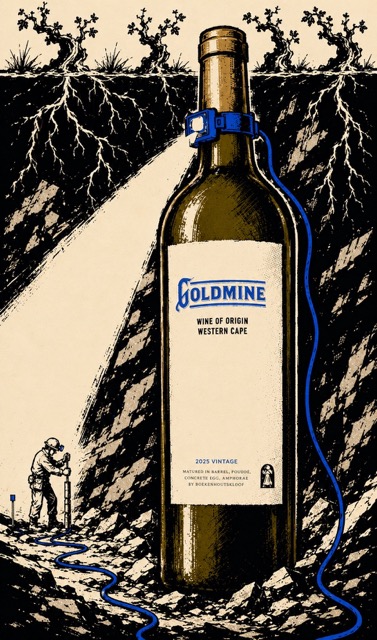
The Michelin Guide has started handing out grapes to wineries, and Burgundy is furious. Which makes it a good week to open a bottle from a cellar that never asked anyone for a rating and ended up on the list at Heston Blumenthal’s Fat Duck anyway. The Goldmine 2024 is the brand-new white twin of The Chocolate Block — and no, the name wasn’t cooked up in a marketing workshop. Goldmine is an actual farm in the Swartland that Boekenhoutskloof bought in 2014. Inside the bottle: Swartland Chenin raised in concrete and clay amphora, Upper Hemel-en-Aarde Chardonnay in foudre, and old-vine Franschhoek Sémillon in concrete eggs — the family silver, quietly loaded into a R305 bottle. Nobody builds a cynical brand extension out of amphorae. So we go down into the engine room almost nobody knows exists: sixty percent underground, 94 Austrian Stockinger foudres, the first OXOline barrel system in South Africa, and 16–18 Italian clay pots — technology bought not to industrialise the wine, but to touch it less.
But of course, if you have yet to sign up for your Monthly HanDrinksSolo Wine Subscription then you’ll have to hunt this wine down in your own time. But until then, here are my tasting notes and some technical specs:
—
TASTING NOTES
Aromas: Big white lily first — not the dainty ones, the five-pointed stars with the fat brown pollen stamens that ruin your shirt if you brush past them. Then it tips over into a candied naartjie sherbet, or orange blossom if you’re a purist; both versions are sitting in the glass at the same time. Behind that, stone fruit — nectarine and a bit of mandarin — and an ever so subtle hint of gravel, or concrete dust, which I accept does not sound appealing, so call it crushed river stone if that lands better.
—
Palate: Three textbook South African Chenin markers, wound tightly together: a chewy, slightly unripe peach, a salty, saline, almost umami seam running down the core, and a flick of bitter grapefruit. Find those three and you have found great Cape Chenin, near enough every time. Then the other cultivars start arriving — a lovely lemon citrus and a real weight to the mouthfeel, which is the old-vine Franschhoek Sémillon turning up to do what old vines do. And then a thing I can only call citrus spice: that drying, oily, faintly tingling business you get from accidentally biting the pith of an orange. Once the fireworks fade you are left with something gentle and frankly comforting — unripe white peach, pushing through generously. It enters as Chenin, a whole cast of other grapes turn up and take a bow, and Chenin is what’s still standing at the end.
—
TECHNICAL SPECS
A multi-region Cape white blend and the white counterpart to The Chocolate Block: 53% Chenin Blanc from the Swartland, 24% Chardonnay from Marc Kent’s Cap Maritime vineyards in the Upper Hemel-en-Aarde, 19% old-vine Sémillon from Franschhoek, and a 4% whisper of Viognier. Each component is raised separately before blending — the Chenin in concrete and clay amphora, the Chardonnay in large foudre, the Sémillon in concrete eggs — in a maturation cellar sixty percent underground that holds 94 Austrian Stockinger foudres, 16–18 Italian amphorae (they break from time to time) and the first OXOline barrel-rotation system brought into South Africa. Wine of Origin Western Cape. First commercial vintage.
Alc. 13% | Sugar 2.5 g/L | Acid 5.2 g/L | pH 3.31 |


Recent Comments