HANtv Episode CHAPTER INDEX:
=====================
00:00 – The ZAR3.00 Bottle That Launched SA Cap Classique (Simonsig Kaapse Vonkel, 1971)
03:01 – Who Is Simonsig? Frans Malan & Estate-Bottled Wine
03:56 – Simonsig Built the New World’s First Wine Route (1971)
05:30 – Cool-Ferment Cellars: Simonsig’s Quiet Revolution
06:10 – One of SA’s First Serious Rhine Rieslings
07:14 – What Is the Simonsig GrapeSmith Range?
08:15 – SA’s First Solo Roussanne at the Cape Winemakers Guild
11:04 – Mediterraneo 2021 Tasting — The Nose (Marsanne, Roussanne, Grenache Blanc, Verdelho)
13:13 – Mediterraneo 2021 — The Palate & Why It’s So Zippy
14:49 – Maritimo 2021 — Maiden-Vintage Rhône Red (Mourvèdre, Grenache, Syrah, Marselan)
17:43 – Maritimo 2021 — The Palate: Light, Fresh, Structured
19:54 – Where to Taste More Stellenbosch Pioneers Next
=====================
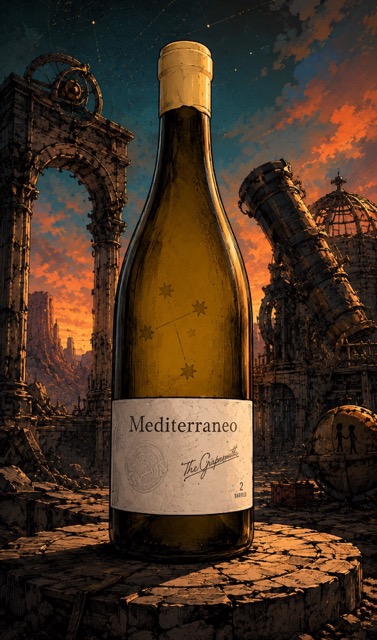
Two decades ago Johan Malan went looking for trouble and found it at Tablas Creek in California, where the Perrin family — the Beaucastel Perrins — poured him a seven-year-old white that was still tight, still mineral, still humming. Not fruity. Not flashy. All texture and tension. He came home and started hunting cultivars that could do that in a Cape getting hotter by the decade: grapes that ripen fast and hold their nerve, with natural acid built in. Mediterraneo is where that hunt landed — Marsanne, Roussanne, Grenache Blanc and Verdelho off South Africa’s oldest Verdelho planting, put down in 1996, before most of today’s trendiest young winemakers could spell it. Barrel-fermented, part-amphora, malolactic deliberately blocked so nothing softens the acid. Eleven barrels exist. Simonsig is on every supermarket shelf in the country, which is exactly why nobody notices they got here first.
But of course, if you have yet to sign up for your Monthly HanDrinksSolo Wine Subscription then you’ll have to hunt this wine down in your own time. But until then, here are my tasting notes and some technical specs:
—
TASTING NOTES
Aromas: The nose is unlike anything. There’s a strange, deep floral thing — orange blossom, but turned up and pushed somewhere odd, almost into apricot candy-bonbon territory. Behind it, a little savoury puff: lees, cookie dough, maybe pie crust. There’s a whisper of oak spice, though honestly it’s more oak-adjacent — you’re smelling lees and imagining the vanilla. It earns that, because much of this wine is barrel-fermented, some components up to eleven months in old oak, with a portion resting in amphora to keep things fresh and breathing. But the oak never leads. It just holds the coat. What leads is that floral burst and that apricot stone fruit — a bizarre, delicious kind of candy, and look, I’m going to say it: Clifton orange. The insanely addictive powdered mix-a-drink of the South African 1980s. Forgive me, Simonsig. There are more sophisticated ways to put it, but sherbety orange and childhood summers is where I’m going.
—
Palate: It opens friendly — soft ripe oranges and mandarins, a lick of boiled-barley sweetness. And then it stops being polite. That citrus acid cuts straight through like a diamond drill, almost sour-sweet, a lemon Warhead thing, piercing but completely delightful. Here’s why it hits so hard: malolactic is deliberately blocked, so there’s no softening of the acid at all. That’s the laser you’re tasting. It’s only 12.5% Alc., so the fruit’s picked early and bright, and none of these grapes are screaming high-acid varieties — the Verdelho is the smallest piece of the puzzle. Yet the whole thing tastes like a salty, citrusy, juicy fistfight in the best way. A liquid fruit advert. The balance is absurd: tart apricot, juicy orange, that lean bright citrus edge keeping everything taut — and never once does the fruit feel mean about it.
—
TECHNICAL SPECS
Wine of Origin Western Cape. Marsanne 68% | Roussanne 21% | Grenache Blanc 6% | Verdelho 5%. The Roussanne came off Simonsberg’s cool south-west-facing slopes, pressed gently and fermented naturally in older French oak for eleven months on primary lees. The Marsanne, from vineyards looking out over False Bay, fermented spontaneously in French oak to hold its fresh fruit aromas, and a portion of the blended Marsanne and Roussanne then spent a few months in amphora, breathing and building complexity. The Grenache Blanc was direct-pressed and naturally fermented, eleven months in French oak. The Verdelho comes off South Africa’s oldest planting, 1996, and was fermented in barrel. Minimal intervention throughout, low sulphite use, and malolactic fermentation deliberately avoided across every variety. Eleven barrels made.
Alc. 12.5% | Sugar 1.8 g/L | Acid 6.3 g/L | pH 3.17 |


Recent Comments